Ochtendflits
Traffic
Dutch traffic is more rule-trusting than many newcomers expect — except when an ambulance cuts through the system
Part of: Expat Essentials
Traffic in the Netherlands usually runs on a high level of trust in the system.
If the light is green, people go. If the lane has priority, people assume that priority will mostly be respected. This can feel very different if you come from a higher-friction traffic culture, where a green light still means "look again before you trust it".
Low-friction traffic
One useful way to understand Dutch traffic is this: it is a Low Friction system.
Low-friction systems try to remove negotiation, uncertainty, and tiny repeated decisions. A zebra crossing is the clearest example. In the Netherlands, many drivers stop automatically. The system is designed so that you do not need a long eye-contact dance in the middle of the street to work out who will yield.
That is very different from a higher-friction traffic culture, where the rules exist but people still have to negotiate them in real time. In those systems, caution often lives in people more than in infrastructure. In the Netherlands, much of that caution has already been built into the layout, the signals, and the shared expectation that the rule will usually hold.
Signs worth knowing
Sources: Road signs in the Netherlands - Wikipedia
| Code | Sign | Meaning | In practice |
|---|---|---|---|
A1 |
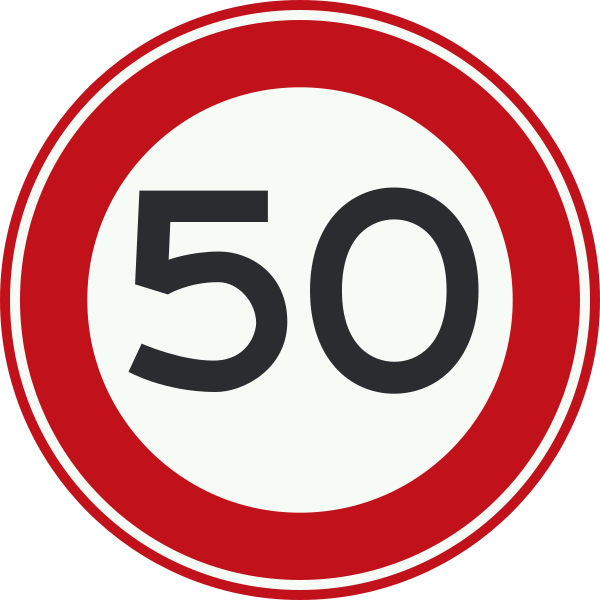 |
Speed limit | The number is the maximum speed in km/h. Stay at or below it. The limit stays until you see A2 or a new A1 with a different number. |
A2 |
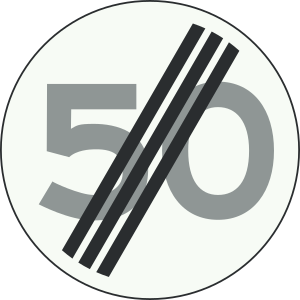 |
End of speed limit | The speed limit is over. The road's default now applies — usually 50 in town, 80 outside. |
B1 |
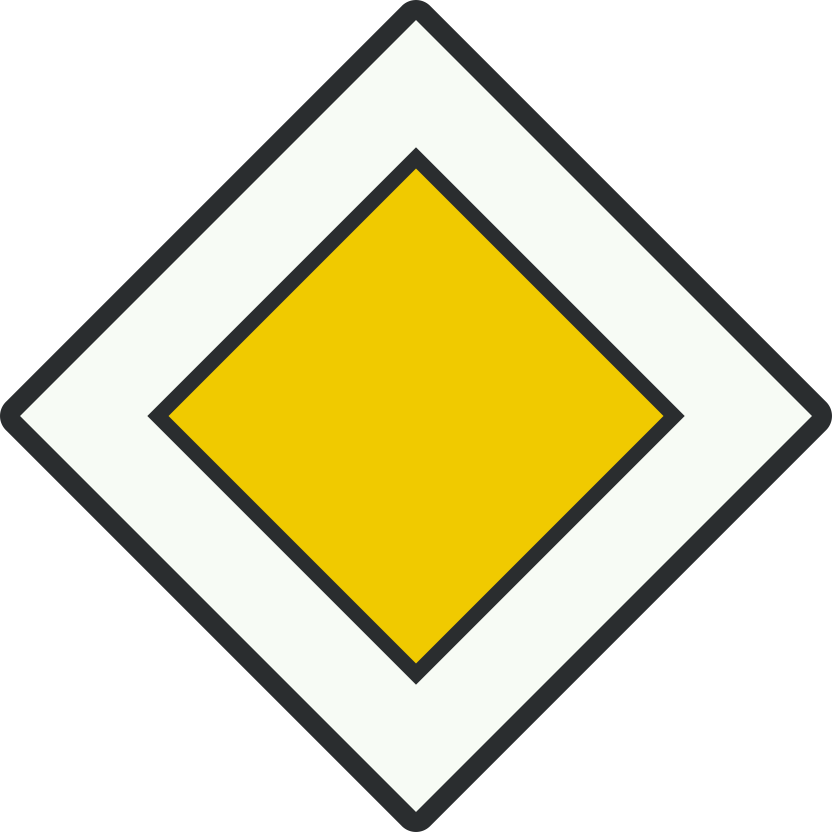 |
Priority road | You keep going. Everyone joining from a side road waits for you — not the other way around. |
B2 |
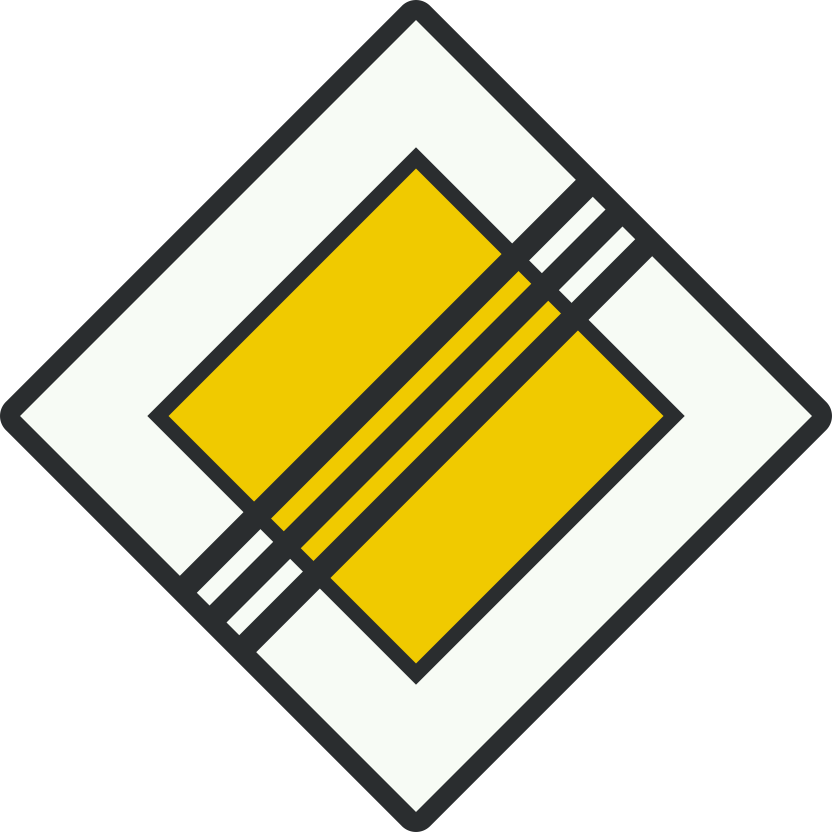 |
End of priority road | Your B1 priority is gone. At the next junction, check who has right of way — it may be the person from the right. |
B6 |
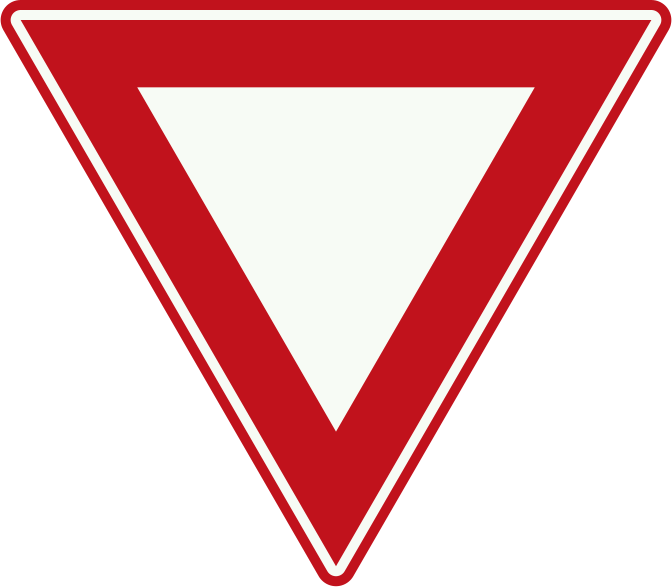 |
Give way | You wait. The road you are entering has traffic with priority. Let them pass before you pull out. |
B7 |
 |
Stop | Full stop — wheels not moving. Even if the road looks empty. Then check and give priority to traffic on the main road before you go. |
C1 |
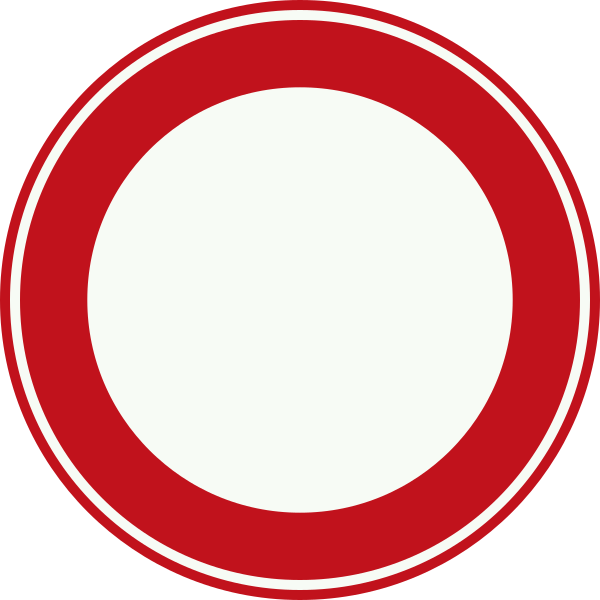 |
Road closed in both directions to all | Nobody gets through — cars, bikes, everyone. Turn around. |
C2 |
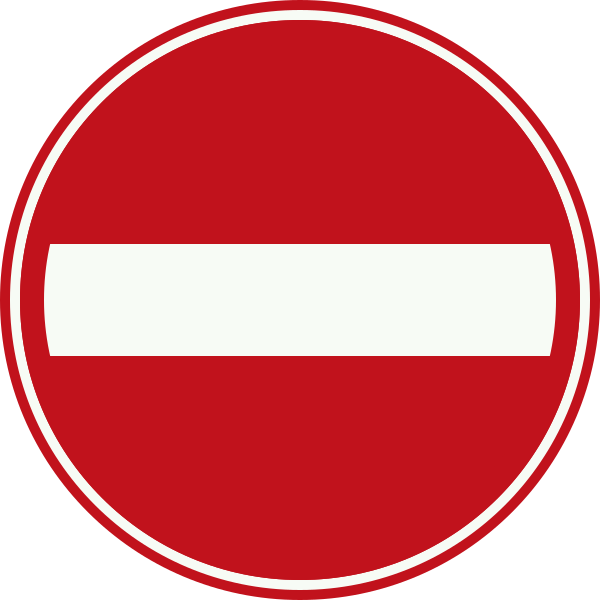 |
No entry | Do not go in from this side. Unlike C1, the road is not fully closed — it just has a one-way rule. This sign sits at the wrong end. Drive in anyway and you are facing oncoming traffic head-on. |
C3 |
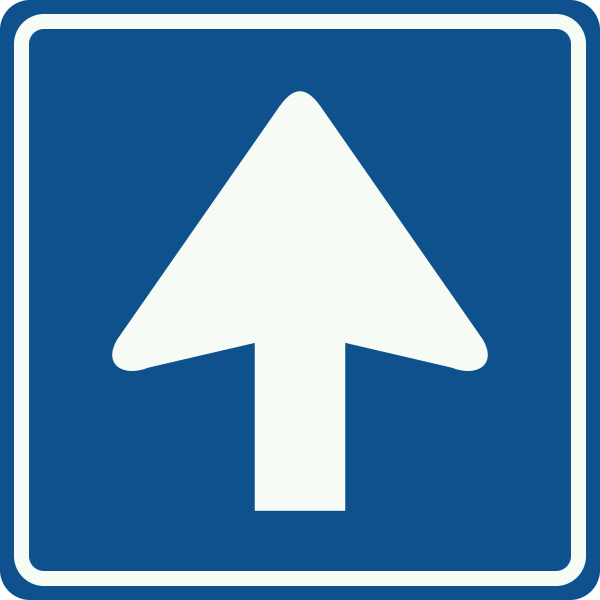 |
One-way street entry | You are allowed to enter this one-way street. Traffic flows in the direction of the arrow. |
C4 |
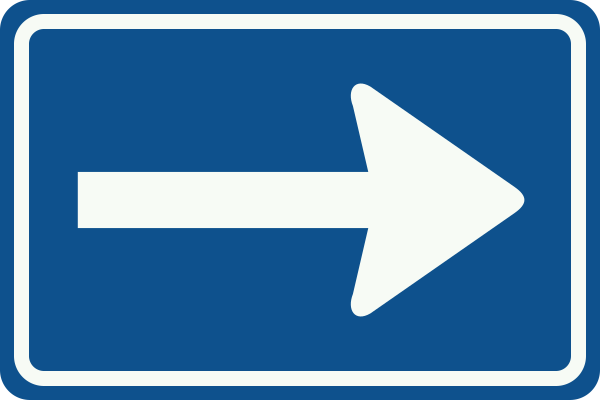 |
Turn right into one-way street | You must turn right here onto the one-way street ahead. Different from C3 — this is a mandatory turn, not just an entry marker. |
C5 |
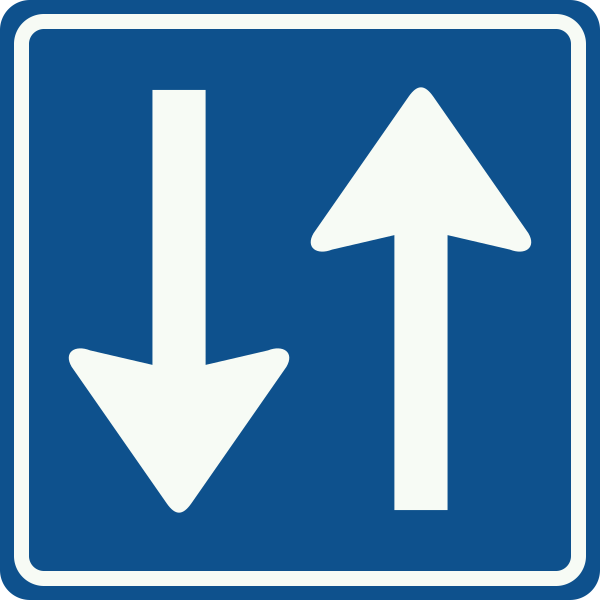 |
Access permitted for both directions | Both directions are permitted here. Usually marks where a one-way road becomes two-way again. |
C6 |
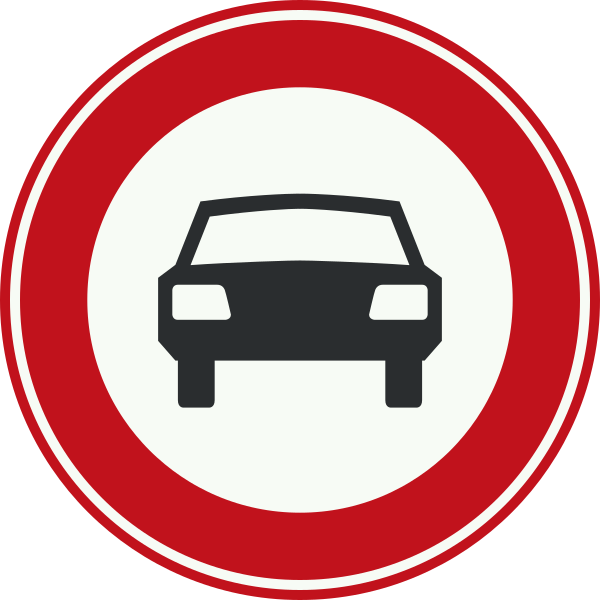 |
No access for motorised vehicles with more than two wheels | Cars and trucks cannot use this road. Motorcycles and mopeds (two wheels) are not affected. Common at the entrance to pedestrian or cycle zones. |
C15 |
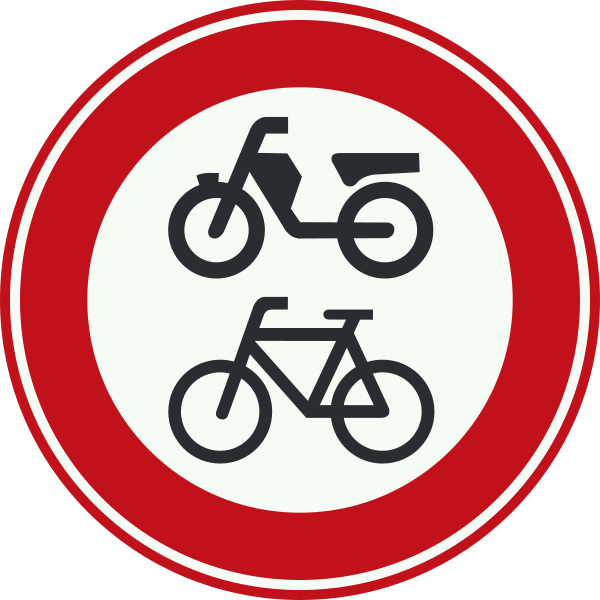 |
No access for bicycles, mopeds and mobility vehicles | Bikes, mopeds and mobility scooters cannot use this road. If you are driving a car, you can ignore this sign — it is not aimed at you. |
C23-03 |
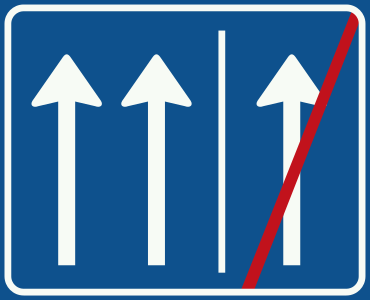 |
End of rush-hour lane | The extra lane on the hard shoulder (used during busy hours) is closing. Move back into the regular lanes now — do not stay in the shoulder. |
D1 |
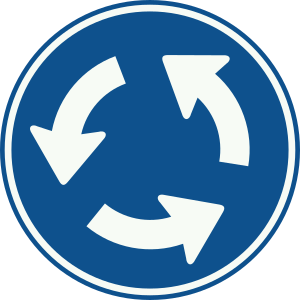 |
Roundabout | Go around the circle to the right. Traffic already on the roundabout has priority — you wait at the entrance until it is clear. |
E1 |
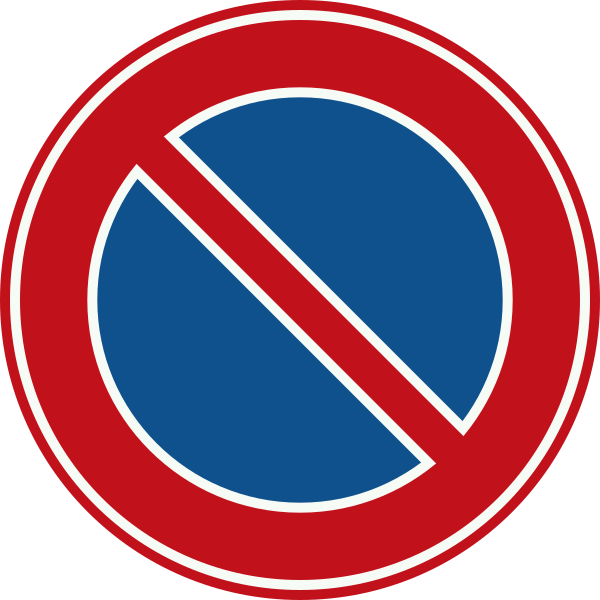 |
No parking | Do not park here. Stopping briefly to drop someone off is fine — leaving your car is not. |
E2 |
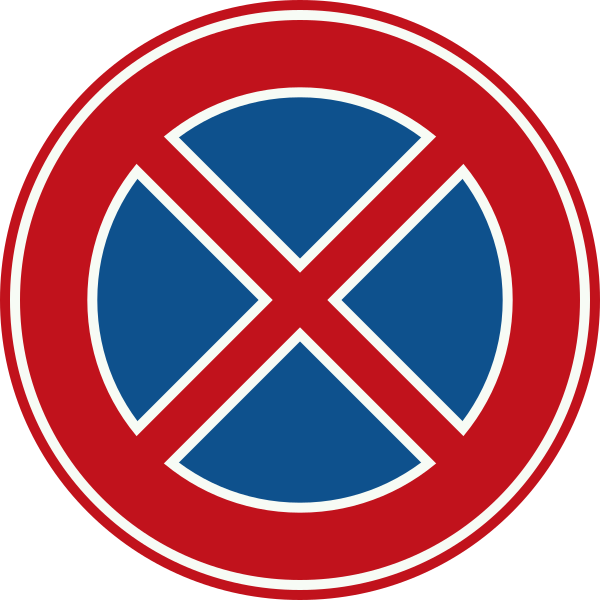 |
No stopping | Do not stop at all — not even for a second. The only exception is if traffic in front forces you to. Stricter than E1. |
F1 |
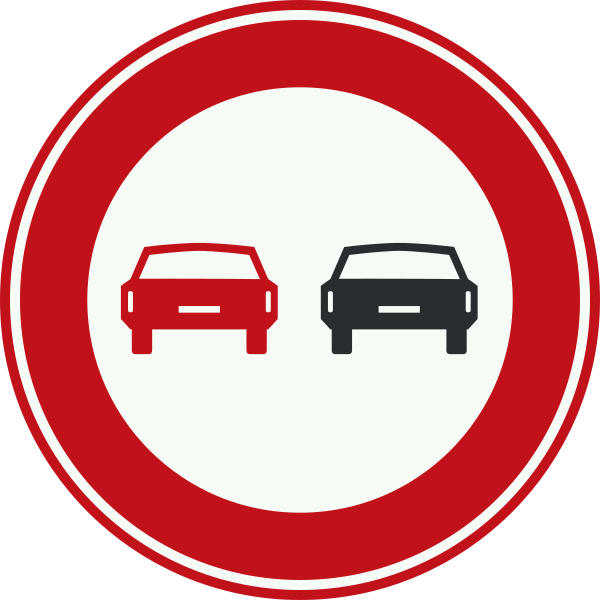 |
No overtaking | You may not pass the vehicle in front of you. Common on narrow two-lane roads. Applies until you see F2 or the road changes. |
F2 |
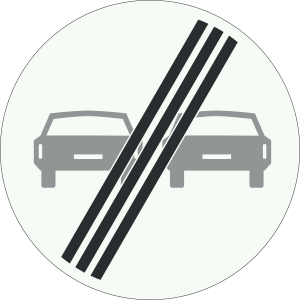 |
End of no overtaking | The F1 restriction is over. Overtaking is allowed again if it is otherwise safe to do so. |
G1 |
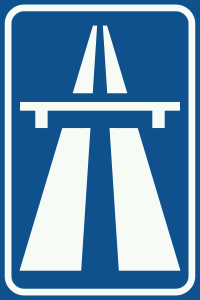 |
Motorway begins (autosnelweg) | You are on a motorway. Daytime speed limit (06:00–19:00) is 100 km/h; night-time (19:00–06:00) is 130 km/h on most sections. No cyclists, mopeds, or slow vehicles allowed. |
G2 |
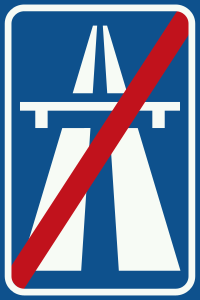 |
Motorway ends | Motorway rules are over. Speed drops back to the road default. Cyclists and slow vehicles may now be present. |
G5 |
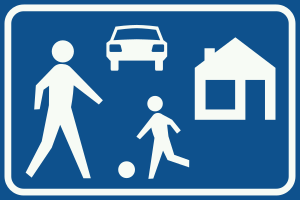 |
Living street (Woonerf) | People — including children — can walk and play anywhere on this street, not just on the pavement. Drive at walking pace (max 15 km/h). If someone is walking in the road, you wait. Park only in marked spots. |
G11 |
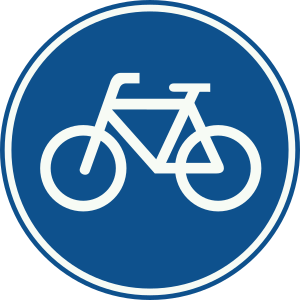 |
Cycle path | Bikes only. You cannot drive or park here. |
G12a |
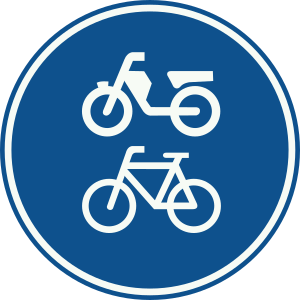 |
Cycle and moped path | Bikes and light mopeds (snorfiets) only. Same rule — stay off it with a car. |
H1 / H2 |
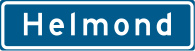 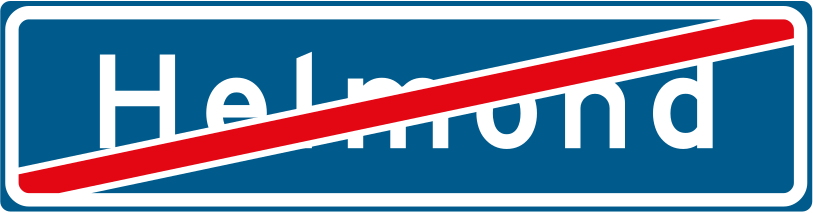 |
Built-up area begins / ends | H1 means you are entering a town. Speed drops to 50 km/h unless a sign says otherwise. H2 means you are leaving — faster road rules apply again. |
J17 |
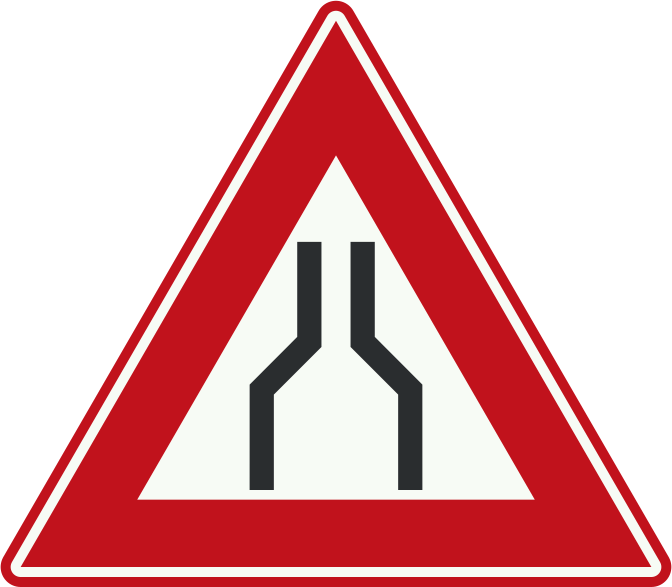 |
Road works ahead | Workers and machinery on or near the road. Slow down. A temporary speed limit sign (A1) is usually posted inside the works zone — follow it. |
J22 |
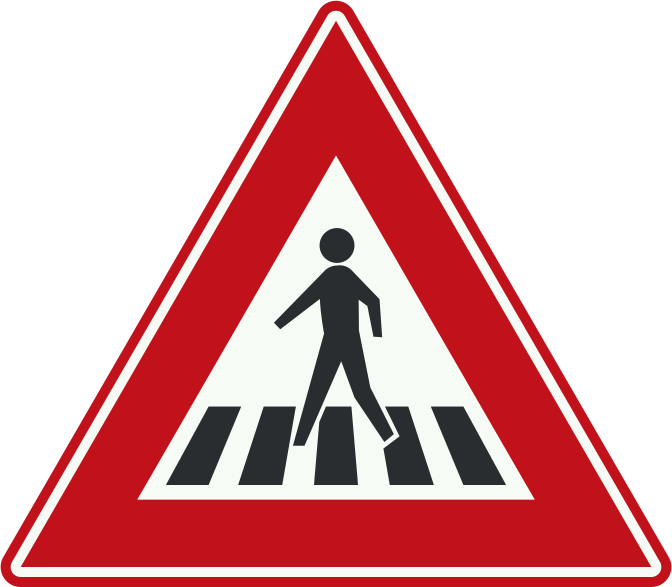 |
Pedestrian crossing ahead | A zebra crossing is coming up. Slow down. If someone is waiting to cross, you stop for them. |
The pattern matters more than memorising every code: speed, priority, access, parking, and road type are all signposted very explicitly here. That is another part of Dutch low-friction traffic. The system tries to tell you the rule before you need to negotiate it with other road users.
How Dutch signs are designed
Once you have seen the signs above, the shape and colour logic becomes clear. Most signs you encounter — even ones not in the table — follow the same rules.
Red circle — a prohibition. You are not allowed to do the thing shown. Speed limits, no-entry signs, and road-closed signs all use the red circle.
Blue circle — a mandatory instruction or a designated space. Cycle paths, parking rules, and direction signs use blue circles.
Red-bordered triangle — a warning. Something ahead requires attention. Pedestrian crossing warnings and junction hazard signs use this shape.
Yellow diamond — priority. Your road is a priority road. You have right of way over traffic joining from side roads.
Rectangular blue sign — information or direction. One-way arrows, zone starts and ends, and area rules often use this shape.
The letter prefix tells you the category: A = speed, B = priority, C = access and manoeuvre, E = parking, G = designated road types, H = built-up areas, J = warnings.
Priority: who goes first
This is the most important thing to understand for daily driving in the Netherlands.
The yellow diamond and the inverted triangle
These two signs define who has priority at junctions without traffic lights.
The yellow diamond on white (B1 in the table above) marks a priority road. If your road has this sign, traffic joining from side roads must yield to you. The priority continues until a sign ends it.
The inverted white triangle with a red border (B6) means you must give way. You are entering a road where other traffic has priority. Slow down and let them pass before pulling out.
On many Dutch roads, priority is not always marked with signs. The default rule is:
Rechts heeft voorrang — if there are no signs, no traffic lights, and no shark teeth, the vehicle coming from your right goes first. You wait for them.
This catches many newcomers off guard. No sign does not mean no rule. When in doubt at an unmarked junction, look right first.
Zebra crossings
A zebra crossing (broad white stripes across the road) gives pedestrians the right to cross. Dutch drivers generally stop automatically when someone is waiting at or stepping onto a zebra. If you come from a culture where pedestrians must make eye contact and negotiate, this will feel different. Here, stepping onto the stripes is treated as a claim to priority that most drivers will respect without hesitation.
Shark teeth on bike paths
You will often see white triangles painted on the road surface — pointed toward you — at places where a cycle path crosses the road. These are called haaientanden (shark teeth). They mean the cyclist has priority. You must yield.
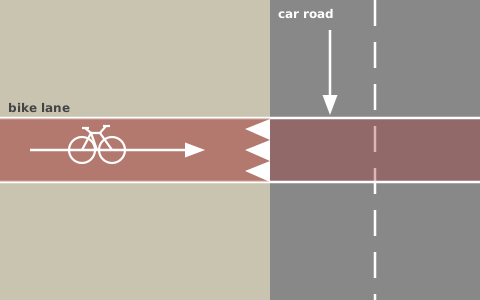
This comes up constantly in Dutch towns. You may have a green light or a clear road, but if there are shark teeth at a crossing with a cycle lane, you need to check for cyclists before pulling forward.
The ambulance exception
This is the one situation where many newcomers can get caught out.
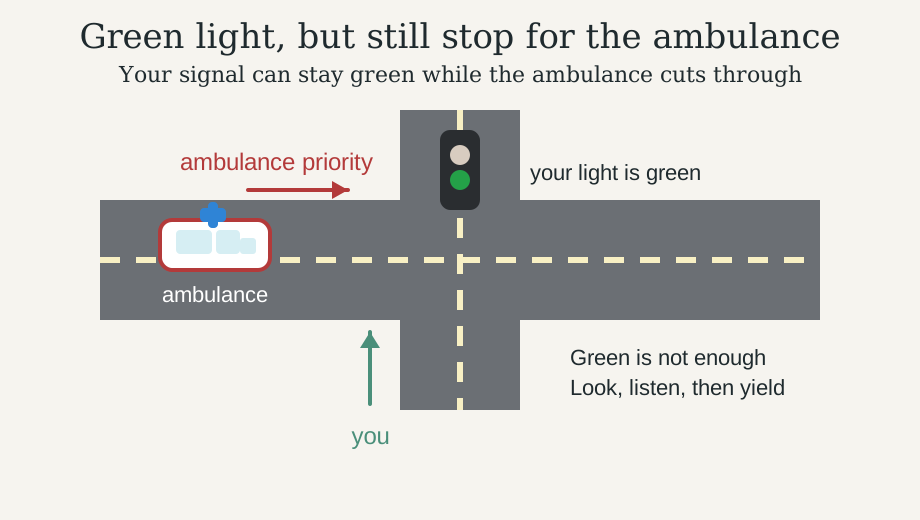
In some countries, when an ambulance is coming through an intersection, a traffic police officer or a more manual traffic system makes the conflict visible for everyone. Your light turns red, you stop, the ambulance passes, and the system explains itself.
In the Netherlands, traffic lights are usually automated and the emergency vehicle may still come through while your light is green. The practical rule is simple: if an ambulance or other emergency vehicle is approaching with priority signals, you do not treat your green light as a command to continue blindly. You slow down, read the situation, and make space.
The dangerous part is psychological. Dutch traffic usually teaches you to trust the infrastructure. That trust is mostly correct. But an ambulance is one of the moments when your eyes and ears matter more than the normal rhythm of the junction.
Why this can feel reversed if you come from elsewhere
If you come from a place where traffic is coordinated more manually, or where drivers are used to double-checking every green light anyway, this situation may feel familiar for a different reason. In those systems, people often learn not to trust the rule too literally because someone else may ignore it, or because the system does not fully explain itself.
In the Netherlands, the opposite pattern is more common:
- most of the time, the system is trustworthy
- people move quickly because they expect others to follow it
- but when an emergency vehicle enters the picture, you must temporarily stop acting like the system explains everything
That is why this situation can be more dangerous for newcomers than it sounds. It is not just a rule difference. It is a switch in traffic psychology.
The broader contrast is this: in higher-friction traffic cultures, people often compensate for weaker coordination by staying alert and negotiating constantly. In the Netherlands, stronger systems remove much of that negotiation most of the time. That makes everyday traffic smoother, but it also means the rare exception can catch you off guard if you trust the system too literally.
For the softer social version of the same pattern, on trains and trams rather than at crossings, see Public Transport Etiquette.
Key Dutch traffic terms
| Dutch | English |
|---|---|
| rijbewijs | driving licence |
| kenteken | licence plate / registration |
| verzekering | insurance |
| snelweg | motorway / highway |
| autosnelweg | motorway (official term, marked G1) |
| rijstrook | lane |
| vluchtstrook | hard shoulder |
| invoegen | merging into traffic |
| inhalen | overtaking |
| voorrang | right of way / priority |
| rechts heeft voorrang | priority to the right (default rule) |
| haaientanden | shark teeth (yield markings) |
| zebrapad | zebra crossing |
| verkeerslicht | traffic light |
| rotonde | roundabout |
| flitspaal | speed camera |
| trajectcontrole | average-speed camera system |
| parkeerverbod | no parking zone |
| stopverbod | no stopping zone |
| eenrichtingsverkeer | one-way traffic |
| doorrijden | keep moving / do not stop |
| fietspad | cycle path |
| snorfiets | light moped (max 25 km/h, no helmet required on cycle paths) |
| bromfiets | moped (max 45 km/h, helmet required) |
| woonerf | living street (see Woonerf) |
| bebouwde kom | built-up area (50 km/h default) |
| maximumsnelheid | speed limit |
| wegwerkzaamheden | road works |
| omleiding | diversion / detour |
| ambulance | ambulance |
| voorrangsvoertuig | emergency vehicle (priority vehicle) |
These guides are written to help you understand the Netherlands — not to replace professional advice. We do our best to be accurate but we make mistakes and information goes out of date. For anything that affects your legal status, taxes, finances, or health, verify with an official source or a qualified advisor.