Ochtendflits
Public Transport Etiquette
Small Dutch train and tram habits that are not exactly rules, but make social space easier
Part of: Dutch Culture, Expat Essentials
Dutch public transport has formal rules and then a second layer of soft behaviour.
This note is about the second layer: the tiny choices people make to reduce friction without discussing them. It is the public-transport version of the same Low Friction instinct you also see in Agenda Culture and, in a harder form, in Traffic.
The diagonal-seat habit
One small example shows up on trains with four seats facing each other.
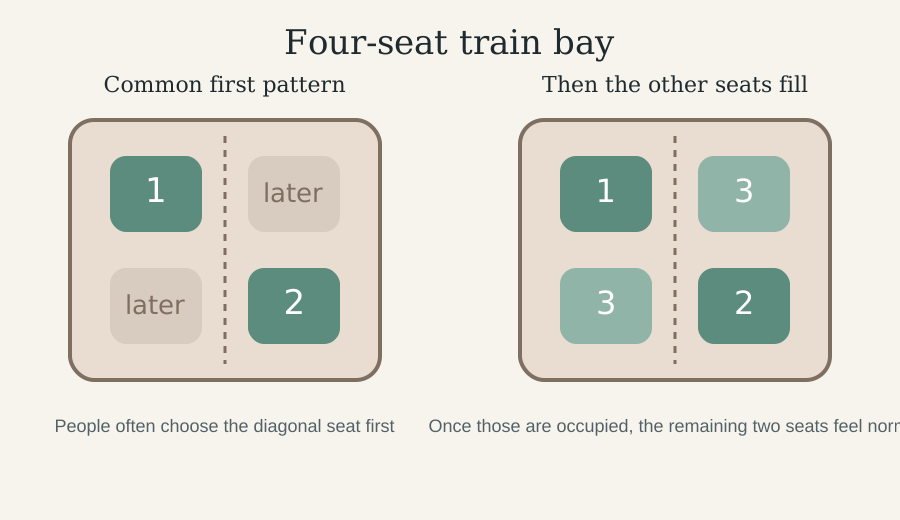
If there are two diagonal seats available, many people will choose the diagonal one rather than sit directly knee-to-knee or side-to-side with a stranger. This is not a legal rule and not even a strict social rule. It is just a quiet preference for space.
Part of it is practical. People are tall. Legs, bags, coats, and laptop posture all take up room. The diagonal seat usually creates less forced intimacy than sitting directly next to someone when other space is still available.
Once those two diagonal seats are occupied, the other two seats fill naturally. Nobody expects the whole four-seat area to remain half empty forever. The point is just that, when there is a choice, people often choose the layout that gives everyone a bit more breathing room.
The stilte coupé
Most NS intercity trains have one or two designated quiet carriages — the stilte coupé. They are marked with a sign on the door and inside the carriage showing the word stilte (silence) with a finger-to-lips icon.
The rule is simple: no phone calls, no audio out loud. Talking is not technically banned, but if you do it you keep it to a near-whisper and keep it short.
What makes this carriage different from any other Dutch social norm is that people enforce it directly. If you take a call in the stilte coupé, a stranger will almost certainly tap you on the shoulder and ask you to stop. Not aggressively — just plainly. This is one of the few situations in Dutch daily life where a stranger considers it their business to correct yours.
That combination — a soft rule that people enforce hard — tells you something about how the Dutch treat shared space. The expectation is that you already know, so breaking it reads as indifference to other people rather than ignorance.
If you are not sure which carriage is the quiet one, the number is usually printed on the side of the train, on the door, or shown on the in-train display. When in doubt, avoid calling until you are out of the carriage.
New Year's Eve: trains stop at 20:00
Every year on 31 December, NS stops nearly all train services at 20:00. This is a deliberate decision — fireworks, alcohol, and crowded platforms create safety risks that NS considers unmanageable on the busiest celebratory night of the year. Trams and metro services in major cities often follow their own reduced schedules.
If you are planning to be out on New Year's Eve, plan your return before 20:00 or arrange other transport. Taxis and ride-hailing apps are in high demand from midnight onwards and prices spike. Many people cycle, walk, or arrange a host to stay with.
Services resume on 1 January, typically from the morning, though frequency may be reduced early in the day.
How to read it
Do not overthink it.
- if the carriage is empty, spread out sensibly
- if two diagonal seats are free, choosing one of them often feels more natural
- if the train is filling up, use the remaining seats without drama
This is not about coldness. It is just another Dutch micro-habit of reducing social friction through layout rather than conversation.
These guides are written to help you understand the Netherlands — not to replace professional advice. We do our best to be accurate but we make mistakes and information goes out of date. For anything that affects your legal status, taxes, finances, or health, verify with an official source or a qualified advisor.